
01
Material and surface
Textured and smooth surfaces appear in the photographs, along with brown, pink and dark finishes. The exact material, temper and finish are confirmed with a physical swatch before production.


Wallet category
Wallets are one of the product families we manufacture, alongside handbags, casual bags, briefcases and computer bags. The styles photographed here range from a long body that keeps notes flat to a compact one built to travel light, and each one closes differently — usually the first decision in a wallet brief.
What this category covers
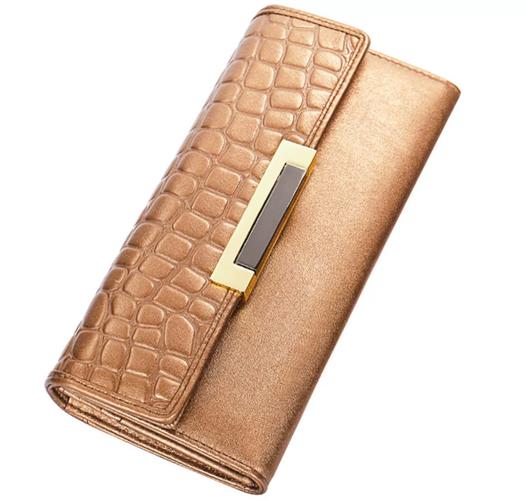
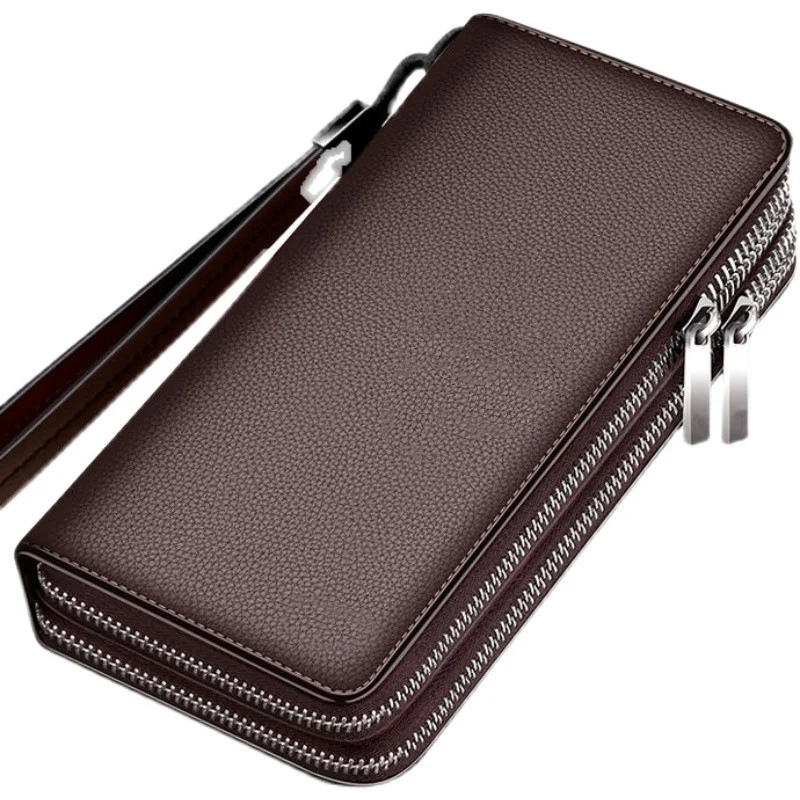
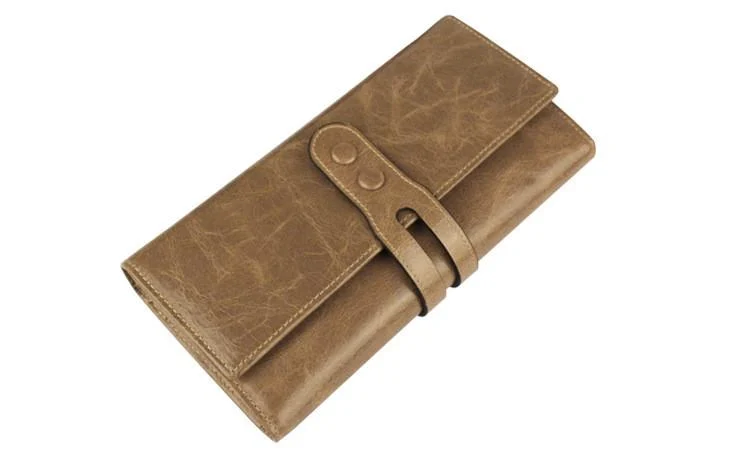
A wallet brief usually starts with what has to fit — notes, cards, coins, a wrist strap — and how it will be carried. The four styles below answer that in different ways: a long flap that folds over the front, a compact flap with a rounded clasp, a flap that wraps around the body, and a long wallet with two zip closures and a wrist strap. Read the shape and the closing first, then the surface.
The names describe what the photographs show. Any further detail — surface material, closed dimensions, interior layout and hardware grade — is agreed in writing per project rather than inferred from a picture.
04
wallet styles in this category, each closed in a different way.
Choosing inside the category
Wallet briefs arrive with contents rather than model codes: how many cards, whether notes are folded, whether coins travel too. How the body closes answers most of that first. These four systems cover the styles on this page.
Where a brief does not fit one system, we develop around it. Closing systems are a starting point, not the limit of what can be produced.
A flap that folds down over the front and is held by a piece of hardware. It is the most direct closure to open one-handed and leaves a clean face for a logo.
Flap stiffness, where the hardware seats on the body, and how the fold line wears after repeated opening.
Instead of folding down, the flap travels around the body. It closes the edges as well as the face, so contents are less likely to shift in a bag.
Flap length against the body, how the ends are secured, and whether the wrap stays tight when the wallet is full.
Two closures running along the body, so one side can be opened without exposing the other. Often chosen when the wallet carries coins or small items.
Zip gauge and pulls, how the two runs meet, and the lining at the gusset where a zip flexes most.
A small body with a single rounded clasp. The point is what it leaves behind — enough for a few cards and folded notes when a bag or a pocket is already full.
Closed thickness when filled, the clasp seat, and the smallest bag it has to disappear into.
The current range
Two long bodies, a wrap-flap and a compact clasp style — each closed in a different way. Open a style to see its photograph at full size and read what that piece shows.
Reading a style
The shape and closing come from the photograph. Everything else is agreed with our team before a prototype is made.
None of the four gives you card-slot counts, closed measurements or a hardware grade. Those are specification decisions, so ask our team to confirm them for the style you shortlist.
Build a shortlistApplications
A wallet line is rarely ordered alone. It usually extends a bag range, fills a promotional set or carries a brand into a lower price point. What changes is the detail specification, not the closing system.
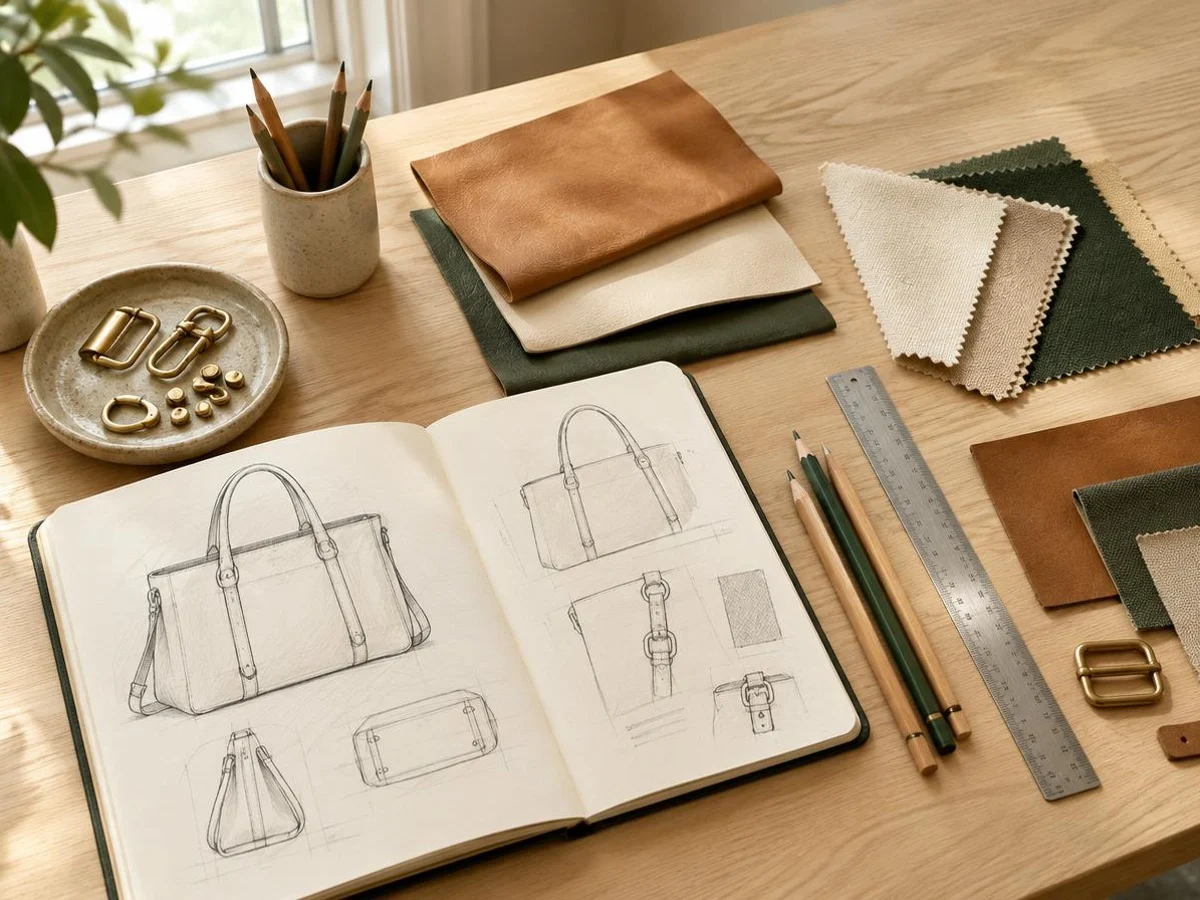
Wallets are usually bought alongside a bag range rather than on their own. A small run of two or three closing systems can round out a season without doubling the development work.
Agree the closing systems, finish family and price steps across the accessory range.
A wallet carries a logo on a small surface, so embossing depth, label placement and packing do most of the brand work in a gift programme.
Sign off logo artwork, deboss depth and presentation packing at the prototype stage.
A long wallet with a wrist strap pairs naturally with travel bags, and a flat body packs light, which keeps cartons easy to handle.
Confirm the wrist strap, closure type and how each piece is wrapped for travel retail.
Because a wallet uses less material than a bag, it is a practical piece for seasonal colour stories and promotional sets.
Confirm the colourways per set and whether the packaging is branded too.
Supported specifications
Six areas are agreed on every wallet project. Details outside them are discussed rather than assumed.
Textured and smooth surfaces appear in the photographs, along with brown, pink and dark finishes. The exact material, temper and finish are confirmed with a physical swatch before production.
Each closing system is its own pattern. Folded dimensions, spine reinforcement and edge construction can be adjusted per project rather than scaled from a photograph.
Card-slot count, note compartments, coin sections and lining colour are set per project. None of these are fixed by the photographs on this page.
Snaps, clasps, zips, zip pulls and wrist straps are specified together with their finish, so a repeat order can be matched to the same component.
Embossing, woven labels, edge paint, stitching colour and hang tags are agreed as one group, with artwork approved before production.
Sleeves, boxes, dust bags and carton marking are planned with the order, along with the requirements of the destination market.
Visible in the photographs
Fold direction, closed or open edges, stitching lines, panel shapes and the hardware tone as photographed. These are the details our team can discuss against a specific style.
Agreed per project
Folded dimensions, card-slot count, coin section, lining, hardware grade, branding, packing and certification requirements. None of these should be inferred from a catalogue photo alone.
Category questions
Questions buyers raise most often about this category. If yours is not here, ask us directly rather than guessing from a photograph.
Ask the teamYes. Name the style — such as the Textured Long Flap Wallet — or send the link to its page, and our team will confirm what is currently available for your market. The photographs show the piece as supplied; material, dimensions, interior layout and hardware grade are confirmed in writing before prototyping begins.
They describe what the photograph shows: the overall shape, the closing system and the visible hardware. They deliberately stop there, because a picture cannot confirm a material grade or a measurement — those belong to the specification agreed with you.
Material and colour are agreed per project. The photographs show the pieces as photographed, so use them as a visual reference and confirm the options you want — including a physical swatch — before prototyping starts.
That belongs to development rather than the catalogue. Tell us which cards and notes the wallet has to hold, plus the target closed size, and our design team will confirm how far the pattern can be adjusted.
We keep our own design team and can work from original designs or from a customer's specific requirements, including ODM orders. A brief with reference images, quantities and target market moves fastest.
The style name or link, target quantity per style and per colourway, preferred material and hardware, branding format, and delivery market. Anything missing can be settled in the follow-up.
Category inquiry
Name a style from the range or describe the closing system you need. Our design team can confirm what is already possible, what needs development, and where the specification has to be settled first.
Direct contact
QINGYUAN CITY HONGJIN BAG CO.,LTD
Handbags, casual bags, briefcases, computer bags and wallets — manufactured with in-house design and QC across the production run.