...
Skip to content

Wallets · Long flap format · Textured surface

Textured Long Flap Wallet

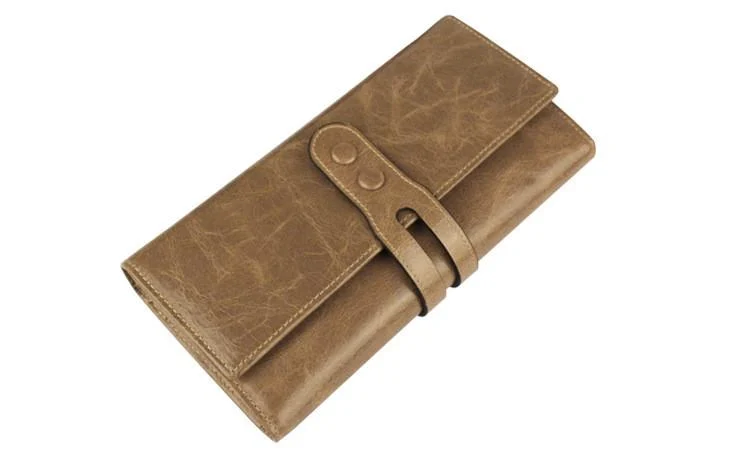
A long wallet with a textured flap and a rectangular hardware detail at the front, shown in the one authorised customer photograph held for this style. This page records what that photograph actually supports, explains where a long flap wallet is usually put to work, and sets out what still has to be agreed — material, measurements, interior layout and hardware grade — before the first prototype is made.

Category
Wallets · small leather goods
Format
Long wallet, flap closure
Front detail
Textured flap, rectangular hardware
Photographs
One authorised view
Single supplied view · 526 × 500 pxOne authorised photograph is held for this style, at 526 × 500 px. No second view exists, so the reverse, the interior and the exact measurements are confirmed with our team rather than inferred from the image.

Format

Long flap wallet

Front

Textured flap · rectangular hardware

Scope

Material and size per project

Product overview

A flap is a closing system before it is a shape.

The first thing a flap decides is how the wallet closes, not how it looks. A long flap folds once over the body, so the fold line, the stiffness of the flap and the way the hardware sits at its edge all control whether the wallet stays shut in a pocket. Texture complicates that: a raised surface on the flap has to line up with the body beneath it, or the two halves read as mismatched the moment the wallet is closed. Then there is the length. A long wallet is usually chosen so notes and receipts stay flat instead of being folded twice, which means the body has to hold a straight edge without bowing when it is filled. Those three things — fold, texture, length — are what this photograph is worth reading for. Everything else, from the interior to the hardware grade, is a specification rather than a picture, and is settled with you.

Category
Wallets — small leather goods made alongside the handbag and backpack ranges
Format
A long wallet body closed by a flap that folds over the front
Front detail
A textured flap with a rectangular piece of hardware, as seen in the photograph
Surface
The exact substrate and finish are confirmed with a physical swatch, not from the image
Closure
The rectangular hardware is visible; how it locks and what sits behind it are agreed per project
Interior
Card slots, note compartments and lining are set per project — none are visible here
Dimensions
No centimetres are published for this style
Photographs
One authorised view at 526 × 500 px, shown as supplied

The style name is a descriptive label written from the photograph, not a model code. Only one authorised view exists, so the reverse, the interior, the lining and the dimensions are agreed in writing per project rather than read off this page.

Wallets · Long flap wallet

What the photo shows

Four details that decide a flap wallet.

Everything below either can be seen in the supplied photograph or is a general construction point about this format. No specification has been borrowed from a similar wallet.

01

Texture has to match across the fold

A raised grain on the flap is cut from a different panel than the body, and the two only read as one object if the pattern is laid out in the same direction. Check the texture on a closed prototype under a low side light, exactly where the flap meets the body.

02

A straight bar is a tolerance test

Rectangular hardware magnifies any misalignment. A plate set a millimetre off, or a screw seated unevenly, shows on a straight edge in a way it never does on a round clasp. Ask how the piece is fixed — plate, screw or rivet — and confirm the same component is available for a repeat order.

03

Long means notes stay flat

The reason to choose a long wallet over a bifold is that a note goes in without a second fold. Start from the currency sizes the wallet has to take, add the seam allowance, then check that a filled wallet still sits flat in a pocket or a bag slot.

04

The fold and the edges age first

A flap creases along the same line every time it is opened, and a long body rubs against whatever it is carried in. Review the fold line and the edge finish on a prototype that has been handled, rather than a freshly made one: those two places decide how the wallet looks after a season.

To confirm

Not shown in this view

  • The reverse side and any rear slip pocket
  • Card-slot count and note compartments
  • Lining colour and interior stitching
  • Closed width, height and depth in centimetres
  • Hardware base metal and plating grade
Ask for the full detail

Small object, few places to hide

A wallet is handled more often than a bag and inspected more closely per square centimetre. Edge finishing, thread tension and hardware seating are the whole impression — there is no lining to distract from them.

See the specification status

General use

Where a long flap wallet earns its place.

These are the occasions this format suits, written as general guidance rather than a claim about this exact piece. Each one ends with the detail to settle before a prototype is made.

A note on size

Nothing on this page fixes centimetres. Start from the notes and cards that have to fit, then set the body. A wallet that measures well on a table can still sit badly once it is full.

Everyday pocket carry

A long wallet is usually carried in a coat pocket, an inside jacket pocket or a bag slot rather than a trouser pocket, so the closed thickness matters more than the footprint. A flap that stands proud of the body catches on a pocket lining; one that sits flat disappears. Fill the prototype and put it in a real pocket before approving the pattern.

Confirm the closed thickness when filled, and that the flap stays shut in a pocket.

Travel and mixed currency

Travelling means notes of different sizes, a few receipts and a second currency, and a long body handles that without folding anything twice. Flat is the advantage here: a wallet that bows when it is full will not slide into a travel pouch or an airline seat pocket.

Check the note sizes it must take and whether a second currency section is needed.

Gifting and private label

A small leather good carries a logo on a limited surface, so deboss depth, label placement and the box do most of the brand work in a gift programme. The textured face is useful here: it holds an embossed mark with less contrast than a smooth surface would, which suits a quiet logo.

Sign off artwork, emboss depth and presentation packing before the material is cut.

A retail accessory add-on

Wallets are usually bought alongside a bag range rather than on their own, and developing two or three fold patterns costs far less than adding another bag silhouette. One long flap, one compact flap and one card holder is a common way to round out a season.

Agree the fold patterns and finish family so the accessory reads with the bags.

Specification status

Stated plainly, including what is unknown.

VisibleTo confirmPer project
  • Format

    Long wallet body closed by a front flap

    Visible
  • Front detail

    Textured flap with a rectangular hardware element

    Visible
  • Surface material

    Exact substrate and finish confirmed with a physical swatch

    To confirm
  • Hardware fixing

    Plate, screw or rivet is decided during development

    To confirm
  • Reverse side

    Not visible in the photograph; agreed per project

    To confirm
  • Closed dimensions

    Not measured or published for this style

    Per project
  • Interior layout

    Card slots, note compartments and any coin section set per project

    Per project
  • Lining

    Colour and material agreed per project

    Per project
  • Edge finish

    Painted, folded or stitched according to the brief

    Per project
  • Branding

    Emboss, woven label or none — agreed against artwork

    Per project

“Visible” means the detail can be seen in the supplied photograph. “To confirm” means it exists but the exact figure is not recorded. “Per project” means it is set with you during development.

Before you approve the prototype

Three checks that catch most problems.

  1. 01

    Close it a hundred times

    Open and close the prototype until the flap has taken its crease. If the fold drifts sideways or the corners lift, the flap is too stiff or the pattern is off — a freshly made piece will not show this.

  2. 02

    Fill it with real notes

    Use the actual currency and cards, not paper cut to an estimate. Notes of different sizes find the weak point of a long body, and the wallet should still sit flat once it is full.

  3. 03

    Look at the hardware edge-on

    Set the wallet down and look along the rectangular bar. Any tilt, uneven seat or mismatched finish is obvious from that angle, and it is the detail a buyer notices first in a shop.

Request the detail sheet

Nearby in the folder

A compact flap, a wrap flap and a double-zip wallet show how differently the same small-goods family can close. Each of the three has its own page, and the wallets category holds every photograph in the folder at size with its reference number.

Before an order we confirm the surface, the interior layout and the hardware grade on a physical prototype, whichever reference you start from. Photographs identify the shape, not the finished specification.

How wallet references work

Questions buyers ask

Clear answers, including the gaps.

This style has one photograph and no published measurements. The answers below say what that means in practice rather than filling the space with invented detail.

Ask something else
  • No. The name is a descriptive label written from the customer photograph, and this site does not publish model codes. Share this page as your reference and our team will confirm the current style reference and the specification available for your market.

Product inquiry

Send this wallet as your reference.

Quote the style name or share this page. Our design team will confirm the surface, the interior layout, the hardware fixing and the closed size before the first prototype is made.

  • This page as the style reference
  • Target quantity per colourway and market
  • Note sizes, card count and interior preference
  • Surface swatch, hardware tone and branding format

The style at a glance

Textured Long Flap Wallet

Category
Wallets — small leather goods made alongside the handbag and backpack ranges
Format
A long wallet body closed by a flap that folds over the front
Front detail
A textured flap with a rectangular piece of hardware, as seen in the photograph
Surface
The exact substrate and finish are confirmed with a physical swatch, not from the image