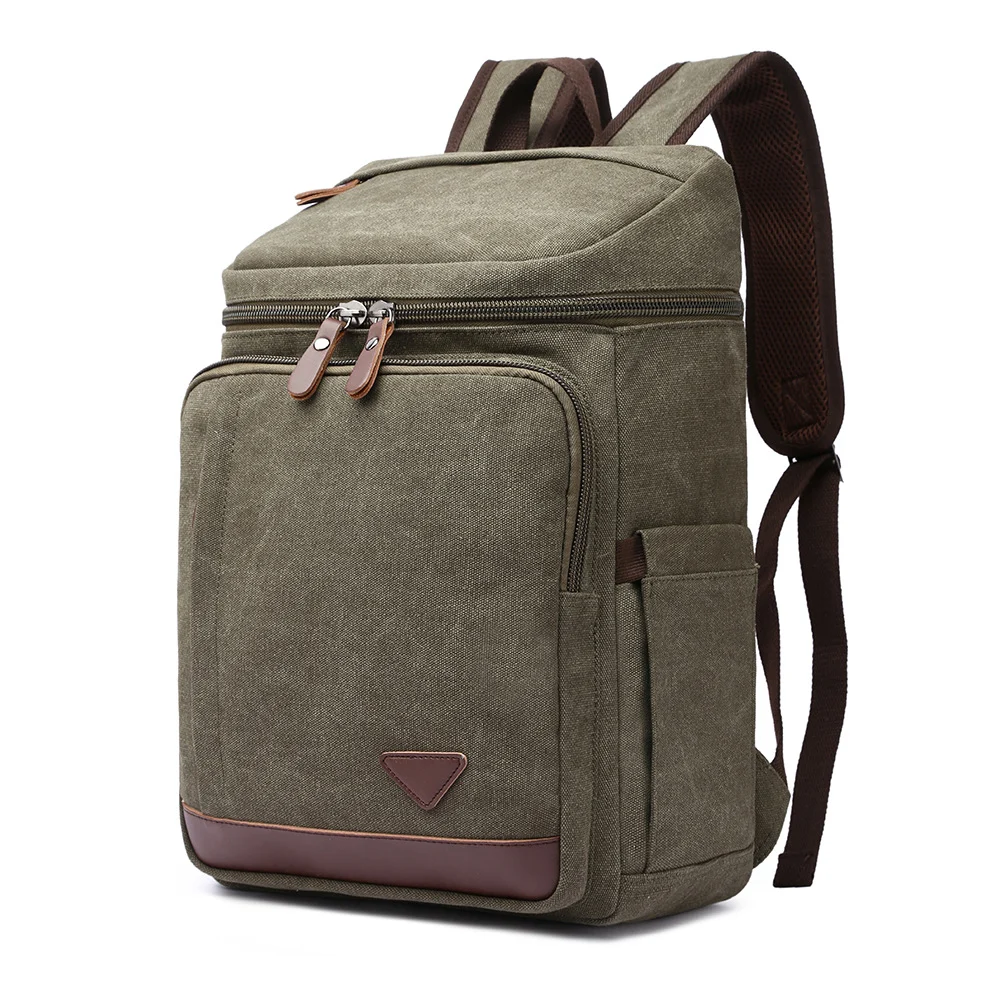
Structured Front-Pocket Backpack
A structured backpack with a front pocket and top zip opening.


Backpack category
Backpacks sit alongside handbags, crossbody styles, school bags and wallets in the range we produce. Four styles are listed in this category, each photographed from the bag the customer supplied and shown on its own page.
What this category covers
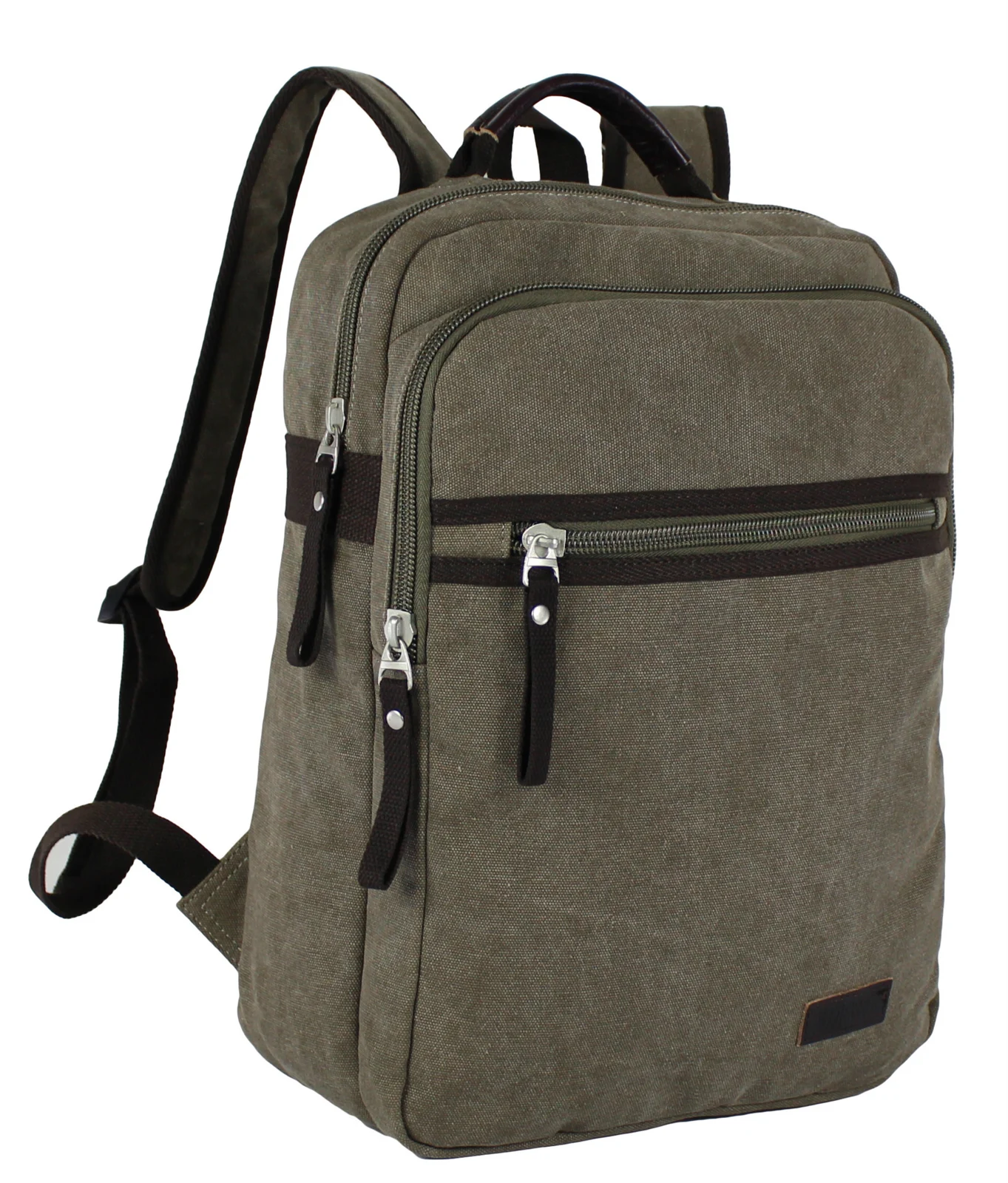
Two straps change the design problem. Load has to sit close to the body, the opening has to work while the bag is on one shoulder, and every pocket is a decision about what the wearer reaches for most. The four styles gathered here cover a structured front-pocket body, a double-zip everyday pack, a blue zipped pack and a grey vertical-zip pack — each photographed as it was supplied.
Litres, device sizes, strap widths, padding and hardware grades are not fixed by these photographs. Each is agreed in writing per project, and a wear test on a loaded prototype settles the questions a photograph cannot answer.
4
backpack styles listed in this category, each on its own page.
5
brief areas to settle before a backpack prototype is cut.
Choosing inside the category
Backpack inquiries rarely arrive with a model code. They arrive with a load, a wearer and a use. These five areas cover what has to be settled before a prototype is cut — in general terms, not as fixed specifications.
Where a brief does not fit one of these areas, we develop around it. The list is a starting point, not the limit of what can be produced.
Volume is usually quoted in litres, but litres alone do not describe a useful bag. The shape of the load matters: a flat laptop and a document folder sit differently from a change of clothes and a pair of shoes. Decide what the wearer carries on a normal day and on the heaviest day of the week, then size between the two.
Slide the typical load into a prototype, then check that the bag still closes comfortably and stands when it is set down.
Select an area to change the guidance above.
See the four stylesThe styles in this category
Every style below is a real backpack from our range, described only by what the photograph shows. Open a product to see it in full, or save the ones you want to discuss with our team.
Using this list
Open any style for its own page. Save the ones you like here, then send that short list with your inquiry.
No styles saved yet
A structured backpack with a front pocket and top zip opening.
A backpack with two front zip pockets and shoulder straps.
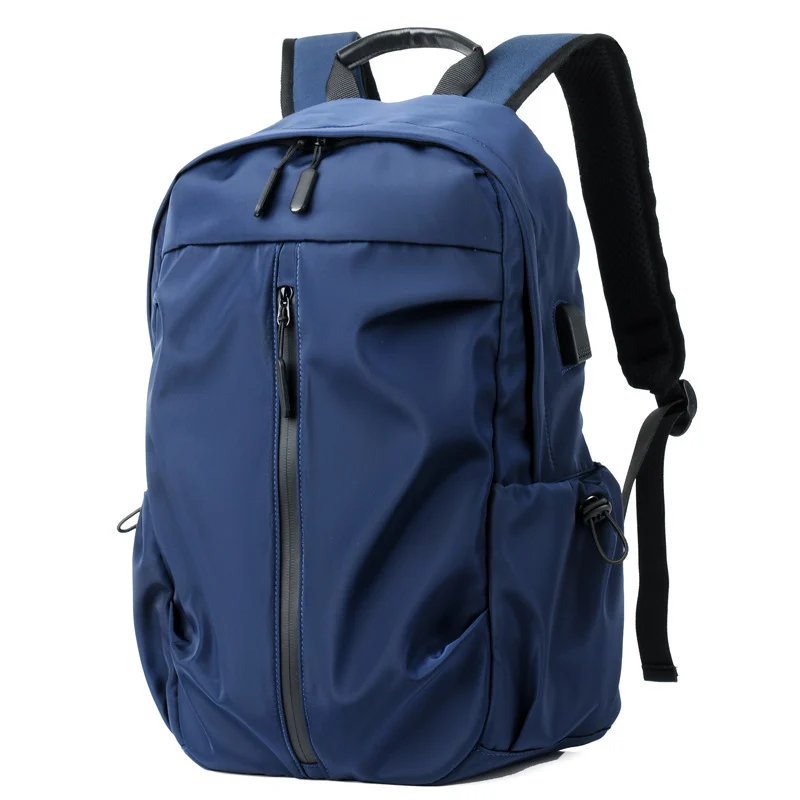
A blue backpack with a front zip pocket and side pockets.
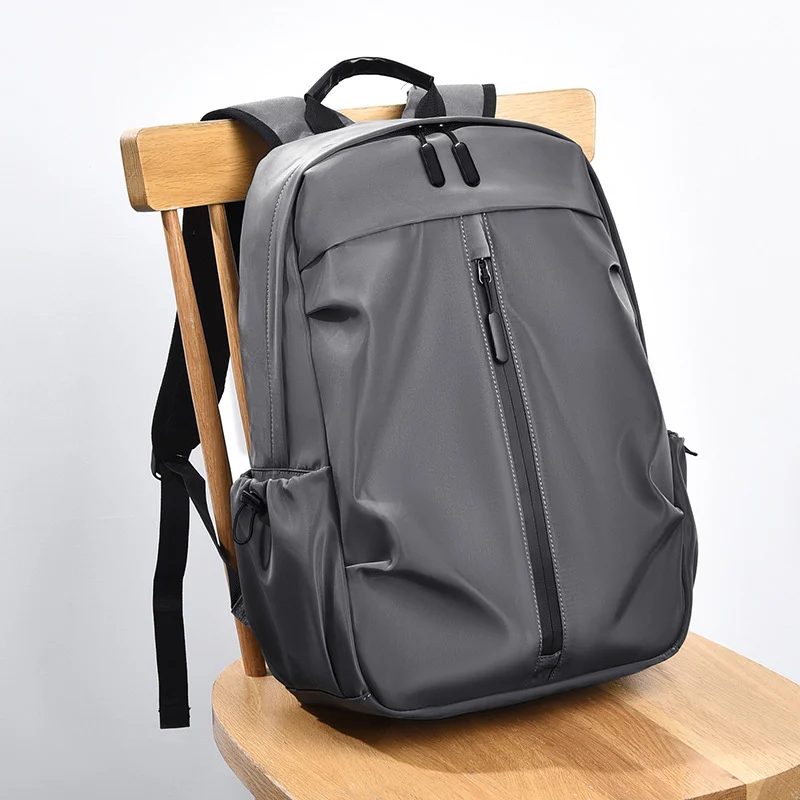
A grey backpack with a vertical front zip and top handle.
Each page describes only what the photograph supports. Dimensions, materials, hardware and packing are agreed in writing for your order rather than read off an image.
Send your shortlistApplications
A backpack programme usually starts from a wearer rather than a silhouette: someone commuting with a laptop, a student carrying books, or a traveller packing for a weekend. What changes between them is the specification, not the fact that it has two straps.

The everyday office bag: a padded sleeve, a place for a charger and a top opening that works on a crowded train. It is often developed alongside a briefcase or computer bag programme, because the buyer is the same.
Settle the device sizes, sleeve layout and how much structure the empty bag should keep.
Student backpacks carry books, bottles and sports kit, so base abrasion and strap attachments take more load than in an office bag. School bags are a separate category of ours, and the two are frequently developed together.
Agree the age group, book and bottle sizes, and which seams need reinforcement.
Soft, top-opening backpacks pack flat and work as a second bag on a longer trip. Cabin restrictions, rather than design preference, usually set the outer dimensions.
Confirm the cabin size your market uses and where a trolley sleeve should sit.
A backpack offers a large printable panel for a brand or an event. Zips, pulls and labels are small parts, yet they carry most of the perceived quality at this price level.
Approve artwork, label placement, and zip and pull specification before prototyping.
Supported specifications
Six areas are agreed on every backpack project. Details outside them are discussed with the design team rather than assumed from a catalogue image.
The photographs show a shell surface and how it catches light, but not its fibre content, coating or backing. Material is chosen against a physical swatch and confirmed in writing before a prototype is cut.
Nothing on this page fixes litres or centimetres. Outer dimensions are set from the load the bag must carry, then checked on a filled prototype rather than scaled from a photograph.
Padding type, strap width, attachment points and optional sternum or waist straps are specified per project. Comfort is checked on a loaded prototype, not on an empty one.
Laptop sleeve size, false bottom, organiser panel, bottle pockets and front pockets are drawn for the brief. Device fit is measured with the case on, never estimated.
Zips, zip pulls, buckles, sliders and any decorative hardware are specified together with their finish, so a repeat order can be matched to the same components.
Woven labels, printed panels, embroidery, hang tags and carton marking are agreed as one group, with artwork approved before production begins.
Readable from the photographs
Shell material appearance, panel layout, strap placement, pocket shapes, zip lines and the hardware tone as photographed. These are the points our team can discuss against a specific style.
Agreed per project
Volume in litres, outer dimensions, device sleeve sizes, padding, hardware grade, branding, packing and any market requirements. None of these should be inferred from a photograph alone.
Category questions
Questions buyers raise most often about this category. If yours is not here, ask us directly rather than reading a specification into a photograph.
Ask the teamYes — each of the four styles has its own page. Open the style you mean and tell us the quantity and colourway you are planning; our team will confirm availability and the details that are not settled by a photograph.
They differ in the front construction: one is a structured body with a front pocket and top zip, one has two front zip pockets, one is blue with a front zip pocket and side pockets, and one is grey with a vertical front zip and top handle. Beyond what is visible, nothing on this page fixes volume, materials or hardware.
School bags are their own category, built around campus loads and a younger wearer. Backpacks in this category are general carrying formats for commuting, travel and daily use. The two overlap in construction and are often developed side by side.
Yes, within what the pattern can support. Tell us what the bag has to carry and how it will be worn; our design team will confirm which parts can be adjusted and which ones change the pattern itself.
We keep an in-house design team and work both from original designs and from a customer's specific requirements, including ODM orders. A brief with dimensions, target quantities and reference images moves fastest.
Name one of the four styles — or the carrying use you have in mind — with target quantity per colourway, material and hardware preference, device sizes where relevant, branding format and delivery market. Anything missing can be settled in the follow-up.
Category inquiry
Name one of the four styles, or simply describe what the bag has to carry and how it will be worn. Our design team can confirm what is already possible, what needs development, and which details have to be settled first.
Direct contact
QINGYUAN CITY HONGJIN BAG CO.,LTD
Handbags, casual bags, briefcases, computer bags and wallets — manufactured with an in-house design team and QC across the production run.
Five categories, each with its own page